RDF reification and why RDF-star replaced it
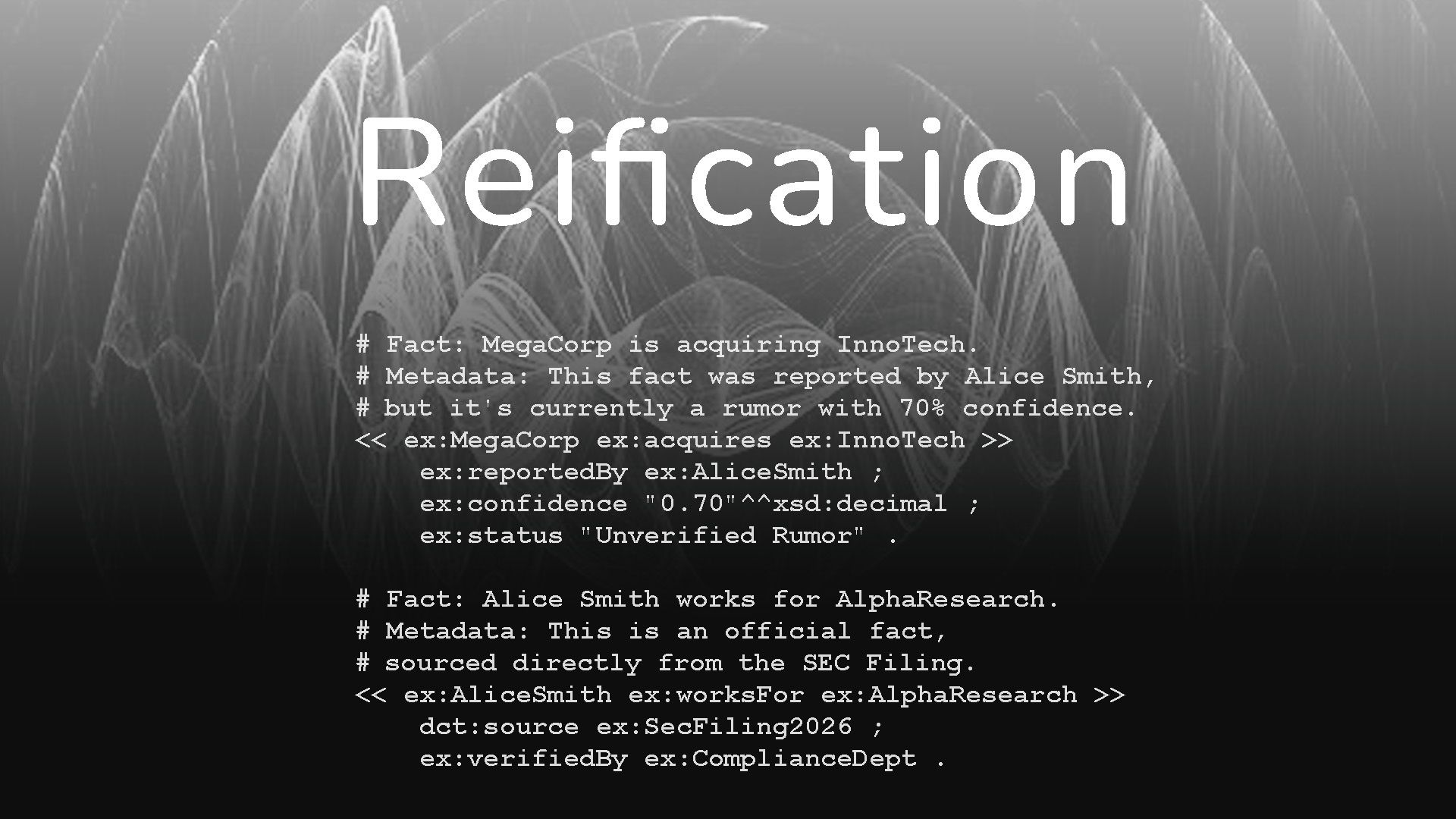
Every RDF practitioner has hit this challenge: you have a triple, and you need to say something about that triple (aka metadata). For instance, who asserted it, when, with what confidence. The old solution is called ‘reification’ and it’s been the wrong solution for as good as 25 years. It requires, in a way, denormalization of triples.
RDF* (RDF-star) fixed this. One triple as subject, annotated directly. Oxigraph, Jena, Stardog and GraphDB all support it now. SPARQL-star gives you query access to embedded triples without reconstructing reification joins.
As far as I can tell everybody in the field has embraced RDF* and, maybe even more important, vendors as well. To be fair, property graphs (LPGs) got this right from day one (applause for payloads as key-value freedom). RDF spent two decades reinventing what edge attributes already gave us, just to stay within triple purity.
I think the lesson isn’t “RDF was wrong and LPG was right”. The world ain’t black-and-white. It’s that statement-level provenance (confidence, source, temporal validity and whatnot) isn’t an edge case that should be bolted onto a graph model. It’s a first-class requirement and a model that doesn’t treat it that way will get worked around, badly, by its users. I silently hope that other needs (temporal and bitemporal graphs, virtual graphs, hypergraphs…) will see the light one day. With appropriate query syntax and instrumentation (tooling).