Company alignment and knowledge graphs
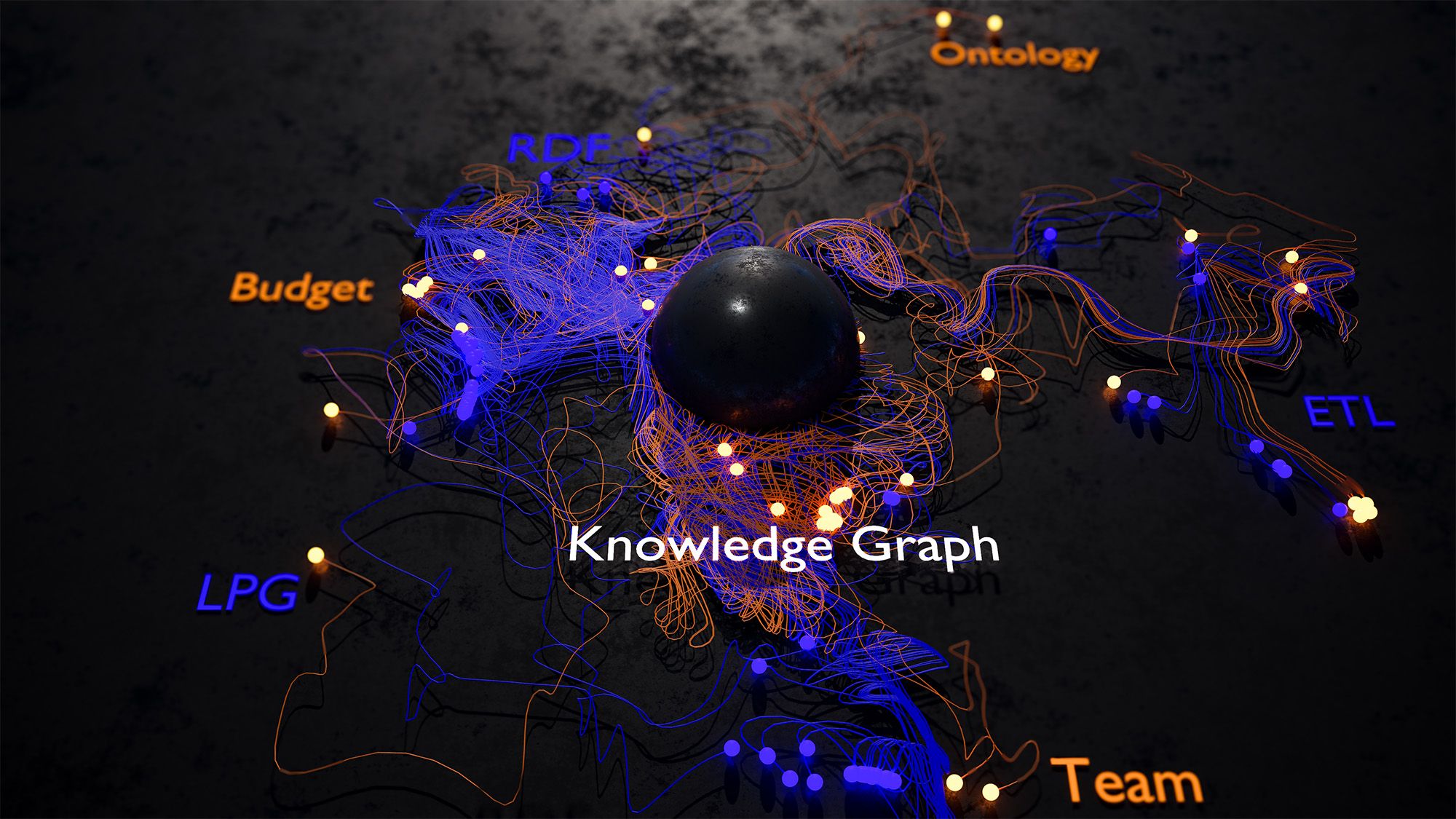
It’s a coordination problem dressed as one. Technology is rarely the issue.
I’ve seen this pattern enough times in the past 20 years: organizations underestimate knowledge graphs (KG) not because the tech is hard, but because everything has to align and it almost never does. There is a generic part you will find in most enterprise projects, but a KG comes with its own flavor.
Here’s what actually needs to work together:
The ontology. Before you extract a single entity, someone has to decide what things are. What counts as a “product”? Is a “contract” the same as an “agreement”? These aren’t data modeling questions. They’re organizational philosophy, encoded in triples. Get this wrong and your graph is just structured confusion.
The ETL layer. Ingesting PDFs, Word documents, databases, APIs, legacy systems. Each source has its own shape, quality, and cadence. Normalizing them without losing semantic fidelity is genuinely hard. Most pipelines handle syntax well and meaning poorly. We have digital transformation era v2.
Infrastructure. Graph databases are not drop-in replacements for relational systems. RDF vs LPG, SPARQL vs Cypher, embedded vs server — these choices cascade downstream. A wrong call here costs months.
LLM/agentic integrations. Everyone wants AI-powered insights now. But LLMs hallucinate, drift, and fail silently. Without careful prompt design, schema grounding, and validation loops, you get confident nonsense at scale.
Company alignment. The hardest constraint. Knowledge graphs require domain experts, data engineers, architects, and business stakeholders to agree on the same model. In practice, each group has different vocabulary, different incentives, and different timelines.
The failure mode isn’t technical. It’s that one of these layers stalls (usually the ontology or the alignment) and the project quietly dies while the infrastructure sits waiting. Money wasted.
I am not afraid of technology, complexity, big visions. People and communication, decisiveness and coherence are a challenge. Something you can sense early on in a project and it never fails to reveal itself when things go not so well.